Updated
Food delivery app checkout
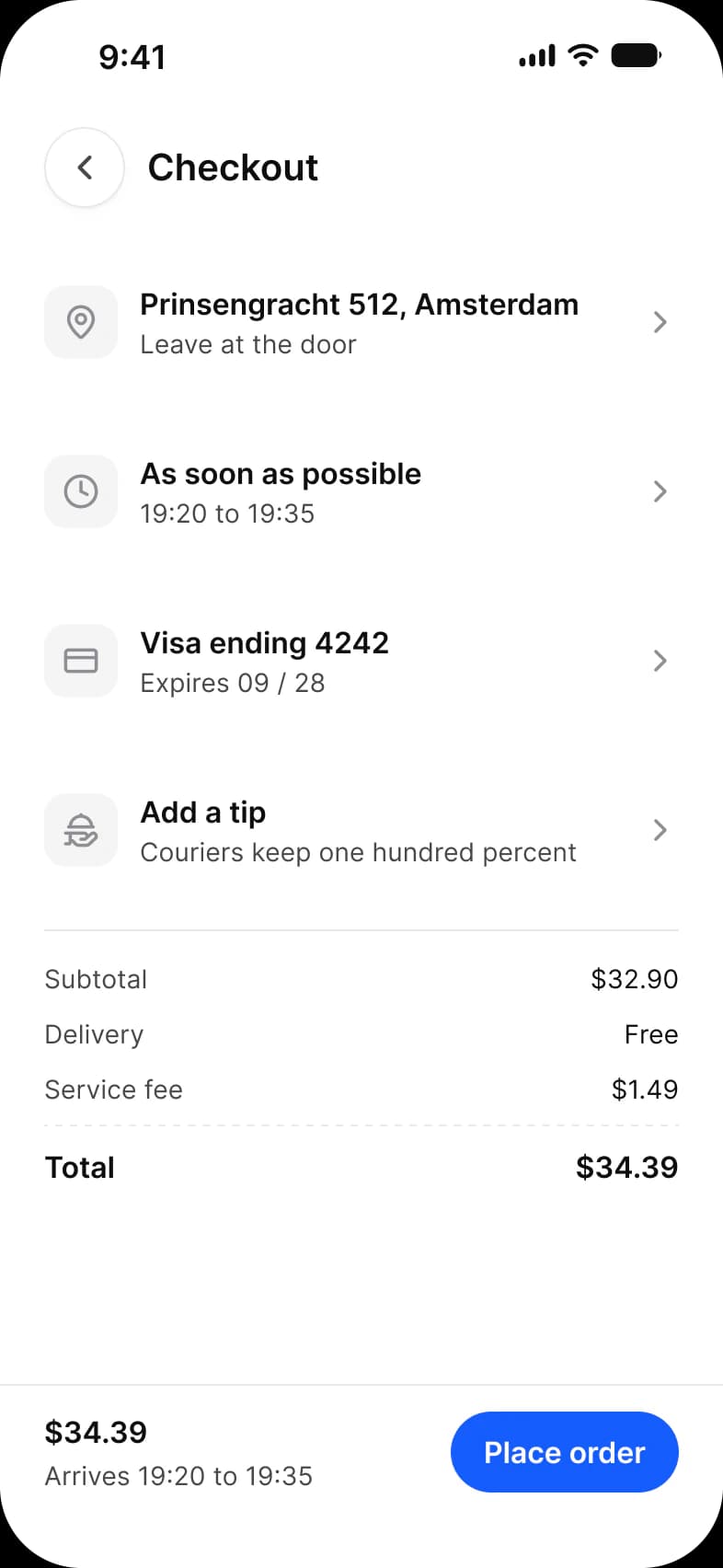
The order, ready to pay, in Appetite UI, a Figma UI kit for iOS and Android apps built like a design system: rows for the address Prinsengracht 512, As soon as possible 19:20 to 19:35, Visa ending 4242 and Add a tip, a breakdown that totals $34.39, and Place order.
Updated
Preview
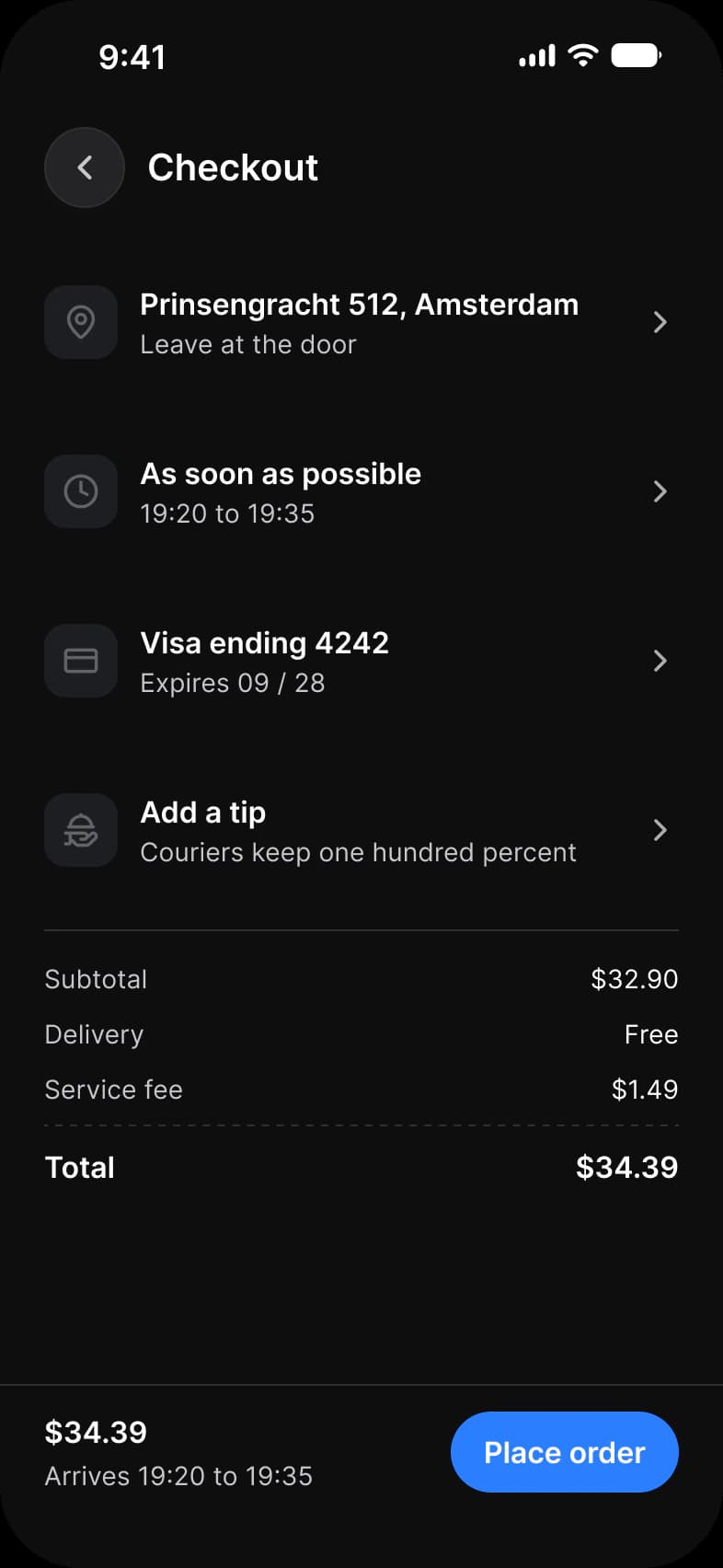
Checkout, from the Foodie page of the Appetite UI Figma file. The theme switch shows the dark frames.
| Screen | What it shows |
|---|---|
| Checkout | Address, time, payment, tip and the total |
Which components carry the checkout pattern?
The kit's components, drawn live from the same tokens as the frames. Tap them: they behave as the Figma prototype does.
List, Price Row
Stepper
Button, Fill, large
How does this screen follow the checkout pattern?
The rules every checkout screen in the kit follows, and what this one does with each.
| Rule | On the food delivery app |
|---|---|
| Show the total before the button | The Price Rows end on $34.39 right above Place order, the same total the cart showed, so nothing changes between the two screens. |
| The button says what it does | Place order names the act; it is the only button on the screen. |
| Every choice is a row | Address, time, card and tip are four List rows, one choice each, so checkout stays one screen. |
What is it built from?
Every control with a component is an instance of it, so one token change moves these screens with the rest of the file.
What changes between iOS and Material?
The frames are drawn in the ios-md Platform mode. Switch a frame to android and these variables take the Material values; the components below are where the two systems draw the same need differently.
| Variable | iOS (ios-md) | Android |
|---|---|---|
platform/sheet/corner | 12 | 28 |
platform/list-row/min-height | 44 | 56 |
platform/min-touch-target | 44 | 48 |
| Component | iOS | Material 3 | What differs |
|---|---|---|---|
| Sheet | iOS / Sheet - Full Screen | M3 / Bottom sheet 412 wide and Side Sheet 320 wide | Material adds a side sheet for large screens |
| List | iOS / List with a 44 minimum row | M3 / List Item, 56, 72 or 88 high by Lines | Material sets the row height by lines of text, iOS sets only a minimum |
Start from these screens.
Every frame on this page is part of the Appetite UI file, drawn from its components and bound to its variables, so one brand edit moves every screen in light and dark.
The file holds 589 variables in 6 collections and exports its token values to SwiftUI, Jetpack Compose, Flutter and CSS. Solo covers one designer and Team up to ten people. You pay once and keep lifetime updates. Price goes up Nov 1
The read-only Figma preview opens the whole file, every screen and every variable, before you buy.